
Platelet-Rich Plasma (PRP) Therapy In San Antonio, TX
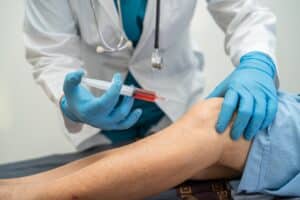
Platelet-rich plasma, or PRP therapy, is a regenerative treatment that uses components from a patient’s own blood to support the body’s natural healing response. For patients dealing with persistent joint, tendon, ligament, or musculoskeletal pain, PRP may offer a non-surgical option when more conservative approaches have not provided enough relief.
At Freedom Spine & Pain Center, Rajesh K. Sharma, MD, is board-certified in anesthesiology and pain management and completed fellowship training in interventional pain management. Vrunda Pandya, MD, is also board-certified in anesthesiology and completed fellowship training in regional anesthesia at New York Presbyterian/Weill Cornell Hospital for Special Surgery.
Their combined backgrounds in pain management, anesthesia, orthopedic care, and image-guided procedures support careful evaluation of whether PRP therapy fits into an individualized pain management plan.
What Is PRP Therapy?
PRP therapy begins with a small blood sample. The sample is processed to separate and concentrate platelets, which contain proteins and growth factors involved in the body’s normal repair processes.
The resulting platelet-rich plasma is then injected into the targeted area. Because the material comes from the patient’s own blood, PRP does not involve donor tissue or synthetic medication.
Rather than simply masking discomfort, PRP is intended to support healing in damaged or irritated tissue. Results vary depending on the condition being treated, the severity of tissue damage, overall health, and other factors.
What Conditions May Be Treated With Platelet-Rich Plasma?
PRP may be considered for certain musculoskeletal conditions when pain has continued despite rest, physical therapy, medication, or other conservative treatments.
Depending on the location and source of symptoms, platelet-rich plasma may be used as part of treatment for:
- Tendon injuries and chronic tendinopathy
- Ligament injuries
- Certain joint conditions
- Muscle and soft tissue injuries
- Persistent orthopedic pain
- Some degenerative musculoskeletal conditions
Not every source of pain responds to regenerative treatment. A thorough evaluation helps determine whether damaged tissue is likely to benefit from PRP or whether another treatment approach is more appropriate.
What Happens During PRP Treatment?
A PRP appointment generally involves drawing a small amount of blood and placing it into a centrifuge, which separates its different components. The platelet-rich portion is prepared for injection and delivered directly to the treatment area.
When appropriate, imaging guidance may improve injection accuracy and place the concentrated platelets near the targeted tissue.
The procedure is performed without surgery, and patients typically return home afterward. Temporary soreness, stiffness, or irritation around the injection site can occur as the body responds to treatment.
How Long Does It Take to Notice Results?
PRP therapy is not designed to produce immediate numbing or pain relief. Its effects depend on biological healing processes that develop gradually after treatment.
Some patients may notice changes within several weeks, while improvement can continue over a longer period. The timeline depends on the tissue involved, how long the condition has been present, and the extent of the injury or degeneration.
More than one injection may sometimes be recommended. Follow-up appointments allow the care team to assess progress and determine whether additional treatment or rehabilitation may be beneficial.
Who May Be a Candidate for PRP?
PRP may be appropriate for patients with certain chronic or recurring musculoskeletal problems who want to explore options beyond medication alone.
A consultation helps determine candidacy by considering:
- The specific source of pain
- Previous treatments and their results
- Medical history and current medications
- The extent of tissue damage
- Overall treatment goals
PRP is not the right choice for every condition. Identifying the underlying cause of pain remains an important first step before deciding on any injection-based treatment.
Why Choose Freedom Spine & Pain Center for PRP Therapy?
PRP treatment depends on accurate diagnosis and precise treatment planning. Dr. Rajesh Sharma is board-certified in anesthesiology and pain management and completed fellowship training in interventional pain management.
Dr. Vrunda Pandya is board-certified in anesthesiology and fellowship-trained in regional anesthesia, with experience involving orthopedic and neurosurgical procedures and postoperative pain control. She also serves as an Adjunct Clinical Associate Professor of Medicine at the University of the Incarnate Word School of Medicine.
Their combined training supports careful evaluation and the appropriate use of regenerative treatments such as platelet-rich plasma within a broader pain management plan.
Explore PRP Therapy in San Antonio, TX
PRP therapy may provide another option for patients seeking a non-surgical approach to persistent joint, tendon, ligament, or soft tissue pain. A personalized evaluation can help determine whether platelet-rich plasma is appropriate based on the source of symptoms and previous treatment history.
Contact Freedom Spine & Pain Center at 210-920-8945 to schedule a consultation and discuss PRP therapy in San Antonio, TX.

